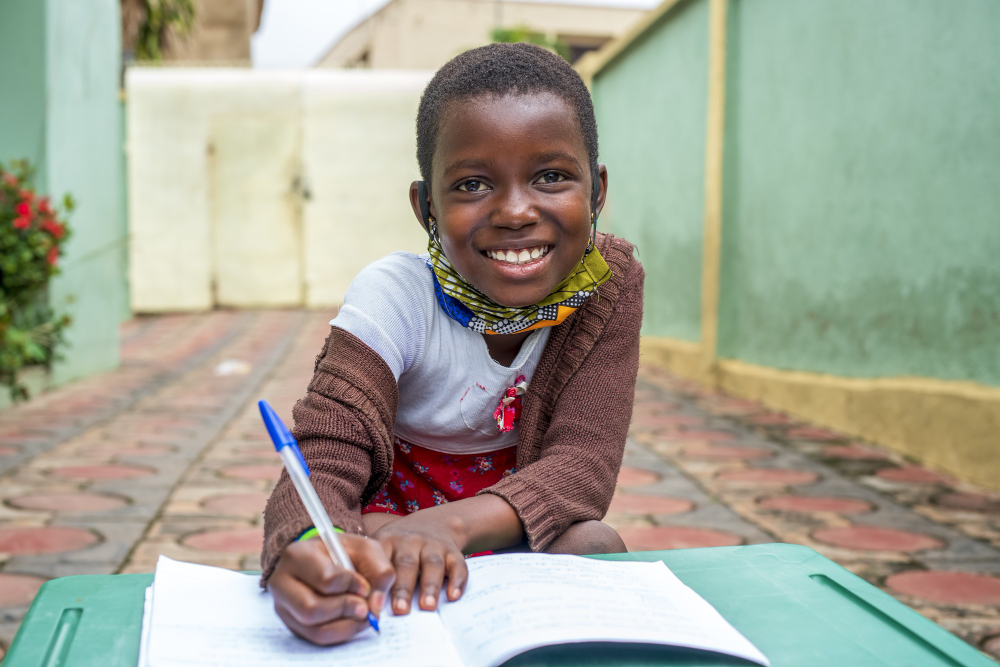
Keeping girls in school is one of the most powerful things a community can do, and one of the hardest. When a girl leaves school early in Kenya, it is rarely because she cannot learn. It is because something outside the classroom got in the way. That is why we treat this as a human rights issue, not simply an education one. A girl who stays in school is a girl who keeps her choices, her health, and her future in her own hands.
Why keeping girls in school is a human rights issue
Education is a right, not a privilege. But the right to learn does not stand alone. It is tied to a girl’s right to health, to safety, and to a life free from violence and early marriage. When a girl is pushed out of school, those other rights tend to fall with it.
The reverse is also true. A girl who completes her education is far less likely to be married as a child, far more likely to make informed decisions about her health, and far better placed to earn a living and lift her family with her. Keeping girls in school protects a whole set of rights at once. That is what makes it so important, and so worth fighting for.
Why girls drop out in the first place
To keep girls learning, we first have to be honest about why they leave. In many Kenyan communities, the reasons are practical before they are anything else.
- Cost. Even where tuition is free, uniforms, books, and exam fees add up. When money is tight, a daughter’s schooling is often the first thing sacrificed.
- Menstrual health. Without sanitary products, many girls miss several days of school every month. Those missed days add up until catching up feels impossible.
- Distance and safety. Long, unsafe journeys to school put girls at risk and discourage families from sending them.
- Care and household duties. Girls are frequently kept home to care for siblings or manage the household.
- Early marriage and harmful practices. In some communities, girls are married young or pulled out of school after harmful rites, ending their education before it is finished.
- Teenage pregnancy. Pregnancy still ends school for many girls, often because of stigma rather than ability.
None of these are about a girl’s potential. They are about the barriers placed in front of her. Remove the barrier, and the girl stays.
What actually keeps girls learning
The good news is that these barriers can be removed, and the solutions are often simple and affordable. What works is rarely one big intervention. It is several small, steady ones working together.
Mentorship is at the heart of it. A girl who has someone to look up to, someone who believes in her and checks on her progress, has a reason to stay. Practical support matters just as much: sanitary products that end the monthly absences, safe spaces where girls can speak openly, and engagement with parents so that families see the value of keeping a daughter in class. Where families are supported economically, the pressure to pull a girl out eases.
The quiet power of mentorship
Of all of these, mentorship is the one that changes how a girl sees herself. It turns “school is not for people like me” into “I can finish, and I can lead.” That shift, more than any single resource, is what keeps a girl in her seat through the hard years.
Keeping girls in school in Bomet
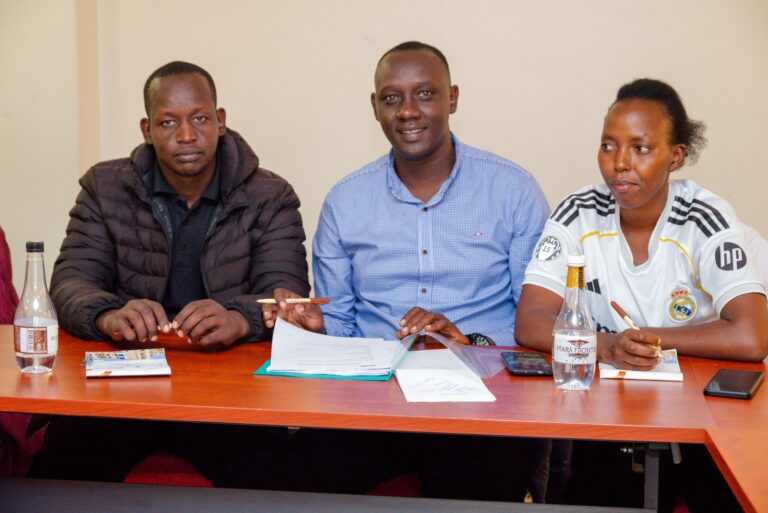
This is not theory for us. Through our gender equality and women’s rights work, Safe Steps Foundation Kenya has mentored more than 500 girls in Bomet, pairing mentorship with the practical support that keeps girls learning. It is one of the six thematic pillars that guide our work, and it is among the most active parts of our programmes in the regions where we work.
We do this because we believe the same thing about every girl we meet: she is not a problem to be solved, she is a leader waiting for the chance to stay in the room.
How you can help keep girls in school
Keeping girls in school is something a community does together. There are real, concrete ways to be part of it. You can support a girl’s mentorship and the sanitary products that keep her in class through a donation to our work. You can partner with us as an organisation, a school, or a county. Or you can simply help a girl in your own community get back to her desk.
If you would like to work with us, reach out to our team. Every girl who stays in school changes more than her own future.
Final word
Keeping girls in school is not charity. It is the protection of a right that belongs to every girl in Kenya. The barriers are real, but so are the solutions, and they are within reach. The question is not whether we can keep girls learning. It is whether we choose to.