Four pillars. One goal.
Our work is organised across four thematic pillars. Each addresses a distinct dimension of building a just, peaceful society — and each connects to the others.
Anchored in the 8 Pillars of Positive Peace
The attitudes, institutions, and structures that create and sustain peaceful societies. These eight pillars guide how we design our programmes and measure our progress.
Free flow of information
Citizens access accurate, timely information about decisions affecting their lives.
Well-functioning governments
Institutions deliver services, uphold the law, and respond to citizens.
Acceptance of the rights of others
Diversity of identity, opinion, and belief is protected and respected.
Equitable distribution of resources
Public resources are shared fairly across regions, communities, and groups.
High levels of human capital
Citizens have access to education, health, and the skills to thrive.
Good relations with neighbours
Communities, counties, and nations resolve disputes through dialogue.
Low levels of corruption
Public office is held in trust, and abuse of that trust is exposed and remedied.
Sound business environment
Economic opportunity is open to all, supported by rule of law and fair competition.
Good Governance & Human Rights
We strengthen accountability, transparency, and inclusive participation in public decision-making. Across many communities, women and youth remain excluded from governance spaces. Our work empowers citizens to understand their rights, engage duty bearers, and demand accountable leadership.
Gender Equality & Non-Discrimination
We work with marginalised communities across Kenya where women, girls, and gender-diverse individuals face barriers that limit their safety, voice, and opportunities. Real gender equality requires addressing the unique challenges of people of all genders and ensuring no one is left behind.
Our Core PrinciplesConflict Resolution & Social Cohesion
We work with community members, faith leaders, and local officials on community-driven peacebuilding. Peace is not the absence of conflict. It is the presence of structures that allow communities to disagree, negotiate, and decide together without resort to violence.
Lasting peace is built in conversations, not declarations.
Evidence-Based Policy Research
Advocacy without evidence is opinion. We conduct research and policy analysis that informs our advocacy, strengthens governance, and advances gender equality on terms grounded in data. Through our partnership with Sight-Edge Consultancy, we bring rigorous methodology, data analytics, and monitoring and evaluation to every programme.
Seven Sustainable Development Goals we advance
Every programme we run is mapped to one or more of these. Our research, advocacy, and community engagement all feed into measurable progress.
No Poverty
Women's economic empowerment, savings groups, and livelihood support for widows.
Quality Education
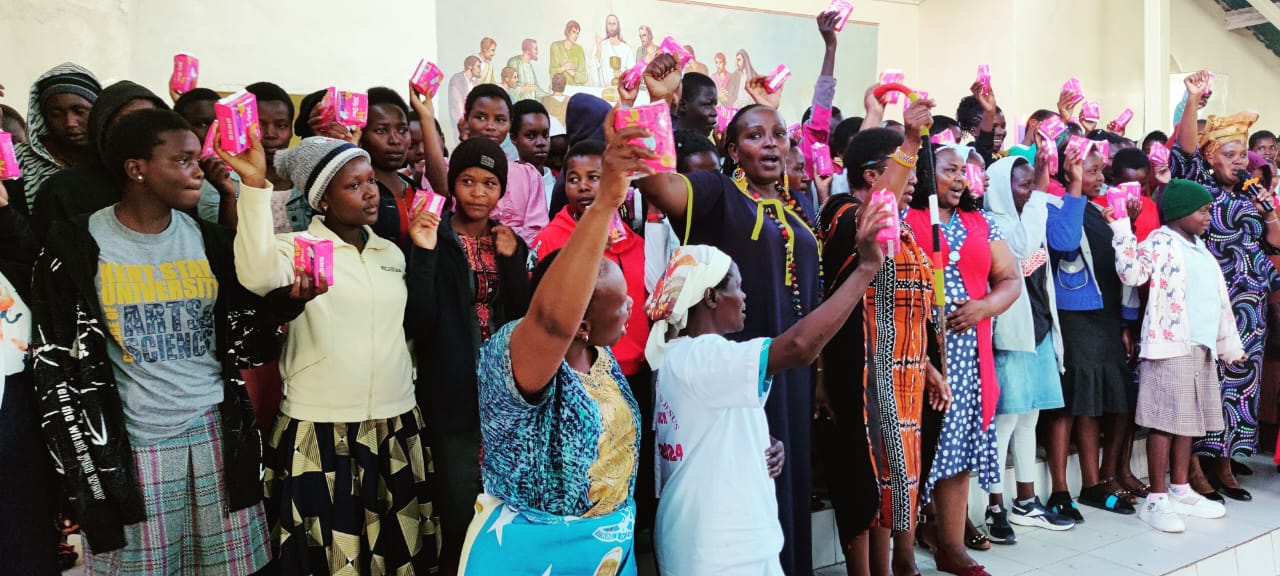
Sanitary pad distribution to reduce absenteeism, mentorship, and rights education.
Gender Equality
Our central pillar — GBV prevention, SRHR, AROP, and women's leadership.
Affordable & Clean Energy
Integrating energy access into community development work.
Reduced Inequalities
Non-discrimination across age, gender, ethnicity, disability, and income.
Climate Action
Community resilience in arid and semi-arid areas, water access and conservation.
Partnerships for the Goals
Coalitions with research partners, county governments, faith leaders, and civil society.
This work is built with partners.
To funders, sister organisations, county governments, and communities — if our pillars align with yours, we want to hear from you.